
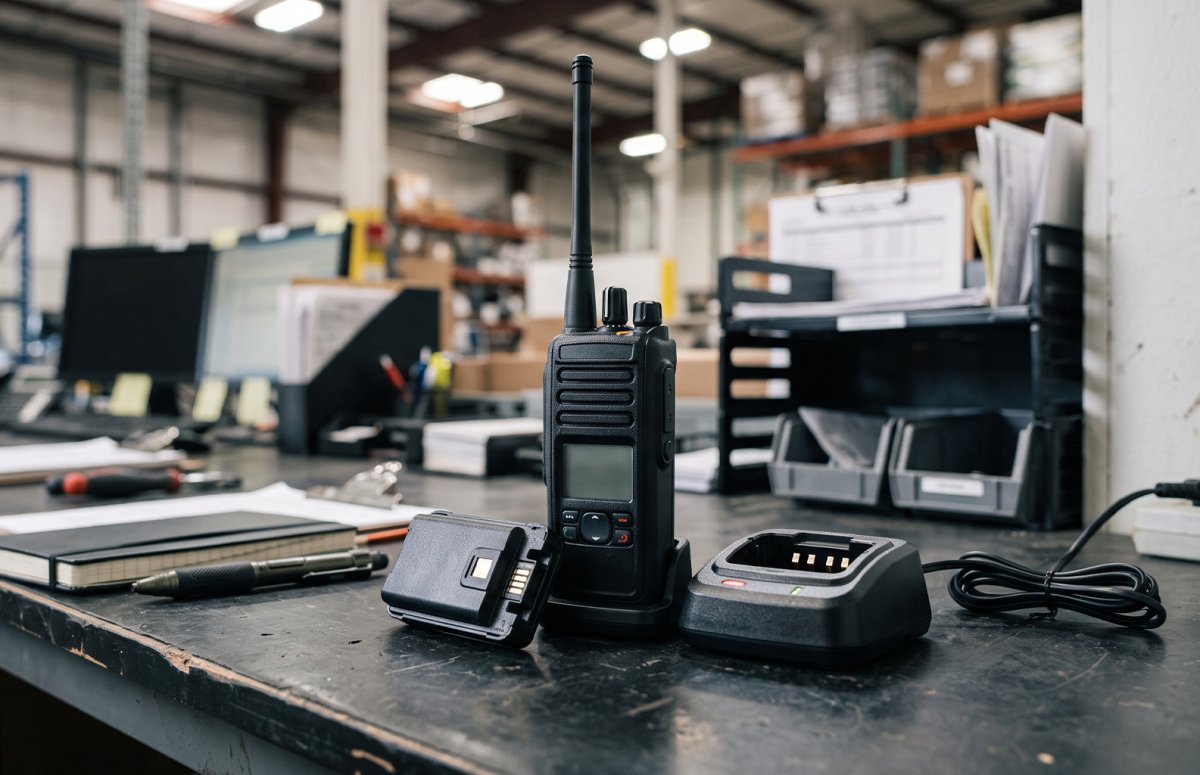
Two-way radios are built to keep teams connected throughout demanding working days. Whether you're coordinating a construction site, managing security operations or running a busy warehouse, reliable communication depends on having your radios ready when you need them.
Modern professional two-way radios use rechargeable batteries designed for everyday business use. With a few simple habits, you can help maintain their performance, support longer service life and get the most out of your equipment.
Here are six practical tips to help you maximise your two-way radio battery life.
1. Charge Your Radio the Right Way
Good battery care starts with the right charging routine.
Most modern professional two-way radios use lithium-ion (Li-ion) batteries. Unlike older nickel-based batteries, lithium-ion batteries don't need to be completely discharged before recharging.
In fact, regularly running them completely flat isn't necessary and can contribute to battery wear over time.
For the best results:
- Use a manufacturer-approved or specifically compatible charger.
- Follow the recommended charging procedure for your radio model.
- Keep charging stations clean, dry and well-ventilated.
- Take advantage of compatible smart chargers that manage the charging process automatically.
For businesses operating multiple radios, dedicated two-way radio battery chargers, including multi-unit charging stations, can make daily equipment management considerably easier.
2. Keep Your Batteries at a Comfortable Temperature
If there's one thing rechargeable batteries appreciate, it's a suitable operating environment.
Excessive heat can accelerate lithium-ion battery ageing, while very cold conditions can temporarily reduce available performance.
Consider a radio left inside a vehicle on a hot Australian summer afternoon. Even without being used, its battery may be exposed to temperatures well above those recommended for storage.
A few good habits make a difference:
- Store radios and spare batteries in a cool, dry location.
- Avoid leaving equipment in direct sunlight or hot vehicles.
- Allow batteries to return to a suitable temperature before charging, following the manufacturer's instructions.
Your radios may be built for tough environments, but sensible storage can help preserve battery performance.
3. Keep Battery Contacts Clean
Sometimes, the smallest details make the biggest difference.
The metal contacts connecting the battery to the radio and charger need to remain clean for reliable electrical connections.
Over time, everyday dust, dirt and moisture can accumulate, particularly in demanding environments such as construction sites, warehouses and outdoor operations.
Periodically inspect the contacts and, where necessary, clean them using a dry, lint-free cloth in accordance with the manufacturer's instructions.
Always switch off the radio and follow the equipment's cleaning guidance before handling the battery contacts.
It's a simple maintenance task that can help keep your equipment charging and operating reliably.
4. Choose the Right Battery for Your Working Day
Not every workplace uses its radios in the same way.
A hotel receptionist using a radio occasionally throughout a shift has different power requirements from a security supervisor communicating continuously during a large event.
Radio operation runtime is published on the radio's brochure, calculated on a 5/5/90 basis. That is, the operation time is calculated assuming the radio is transmitting (TX) 5% of the time, receiving (RX) 5% of the time, and the remaining 90% of the time, the radio is sitting idle.
When comparing batteries, you'll often see capacity expressed in milliampere-hours (mAh). For batteries of the same voltage and compatible design, a higher capacity can provide longer operating time, although actual results vary due to several factors, including the configuration of your radio settings (low/high power mode), battery saver mode and user operating conditions.
For teams working extended shifts, consider whether higher-capacity or additional two-way radio batteries would be beneficial.
Always check compatibility with your particular radio model, including any applicable safety certification requirements.
5. Make the Most of Your Radio's Power-Saving Features
Many modern two-way radios incorporate features designed to use power efficiently.
Depending on the model, these may include battery-saving modes, intelligent power management and adjustable display settings.
When you buy a radio system from us, we will handle the radio programming, in accordance with your team work flows.
Generally speaking, power-saving adjustments should never compromise essential coverage, emergency alerts or other safety-critical functions. We will evaluate all of these considertations, when we design your radio system.
The goal is to optimise performance without sacrificing reliable communication.
6. Build a Simple Battery Maintenance Routine
If your organisation operates a fleet of radios, consistency is key.
Rather than managing batteries individually when attention is needed, establish a simple routine that keeps equipment ready for every shift.
This might include:
- Never leaving the radio turned on, whilst sitting in the charger. (It will burn the battery out!)
- Keeping compatible spare batteries available for longer shifts.
- Periodically inspecting batteries and chargers for wear or damage.
- Replacing batteries every 24 months, or approximately 500 recharges from flat to full.
- Following manufacturer guidance when storing batteries for extended periods.
Rechargeable batteries naturally lose capacity with age and repeated use. In particular, Li-Ion batteries will generally last approximately 500 recharges, from flat to full, before they reach 80% capacity, and will soon need replacing. When a battery no longer provides the runtime your team requires, replacing it with a compatible battery helps maintain operational readiness.
As an additional safety precaution, batteries showing swelling or physical damage should be taken out of service and handled according to the manufacturer's safety instructions.
Used batteries should be recycled through an appropriate battery collection service, rather than disposed of in general waste.
Keep Your Team Connected, Shift After Shift
A little attention to battery care can go a long way.
From choosing the right chargers to maintaining clean contacts and planning ahead for busy working days, these simple practices help businesses get reliable performance from their two-way radio systems.
At Radio Warehouse, we help Australian businesses and government organisations select professional walkie talkies and two-way radios, compatible batteries and charging solutions suited to their operational needs.
Need advice about replacement batteries, charging systems or managing a larger radio fleet?
Contact our team for free, independent expert advice and keep your team connected when it matters most.
Your Mission Is Our Passion®